Sprint 02
Review:
–
- Grow partnerships and the team
- Advance the design automation pipeline
- Develop flight control and avionics
- Build and test prototype hardware

Define the mission requirements: range, speed, interception time and cost. The pipeline combines aerodynamics, structures, propulsion, electronics and control into one aircraft design.
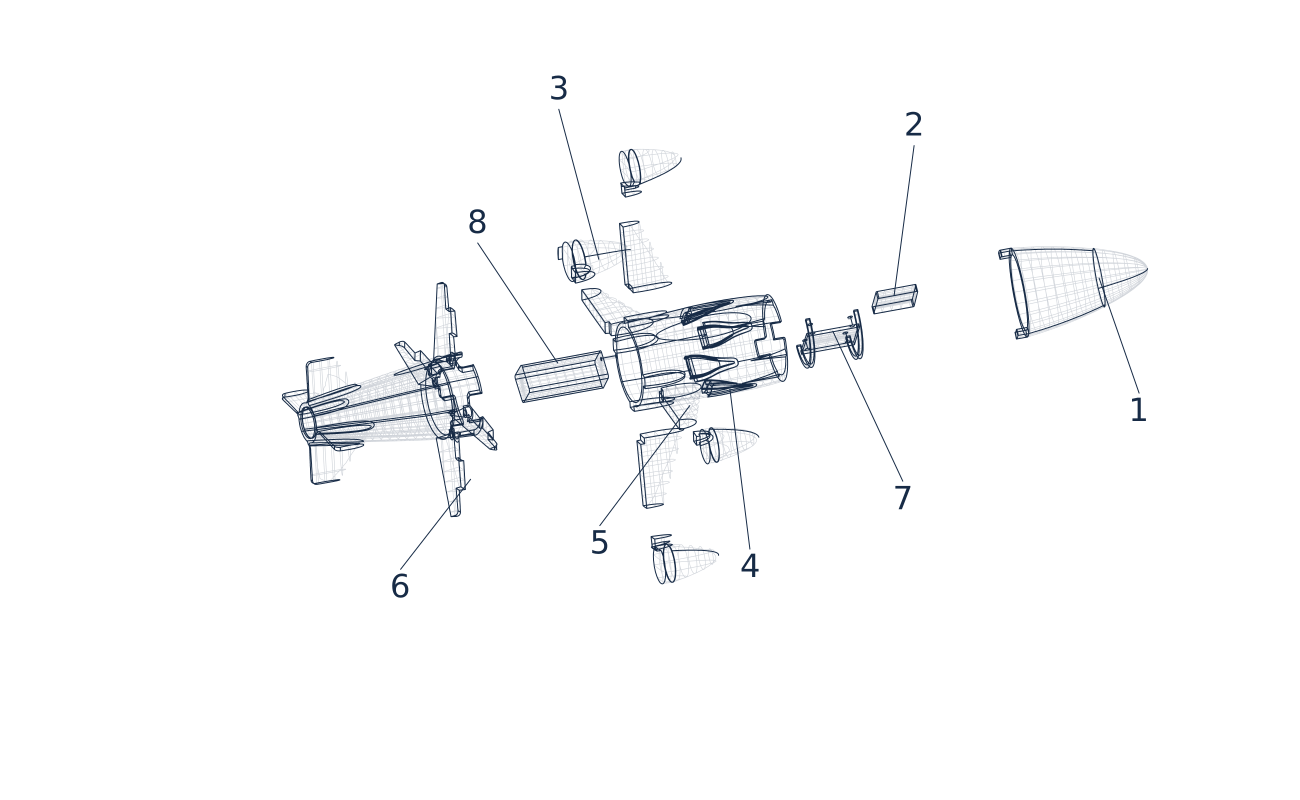
Use simulation and physical tests to compare designs and improve the next iteration. The exploded view shows the components; the tree below maps what changes when the mission changes.
Example requirements. Speed increased from medium to high.
Changes in mission requirements flow through aircraft design. Simulation and physical tests guide each iteration.
Range · payload · speed · endurance · cost
Update every discipline from the same mission inputs.
Wing, fuselage and component dimensions.
Lift, drag, stability and the flight envelope.
Loads, materials, wall thicknesses and weight.
Motor, propeller and battery requirements.
Sensor layout, control settings and interfaces.
Balance performance, weight and cost against the mission.
Check airflow and structural response before building.

Build the prototype, measure results and refine the next design.
Two-week sprints. One step closer to flight.
Review:
–
Review:
–
Our engineering pipeline can lower the effort needed to build aircraft. We recognise the dual-use risks this creates.
Weapons, explosive payloads, autonomous target selection and engagement without human authorisation remain outside the project.
The pipeline supports engineering decisions. Decisions about actual interception remain a human responsibility.
We protect sensitive technical information. Scientific methods may be shared openly; deployable implementations require separate review before publication.








 Logo © Switzerland Innovation Park Zurich